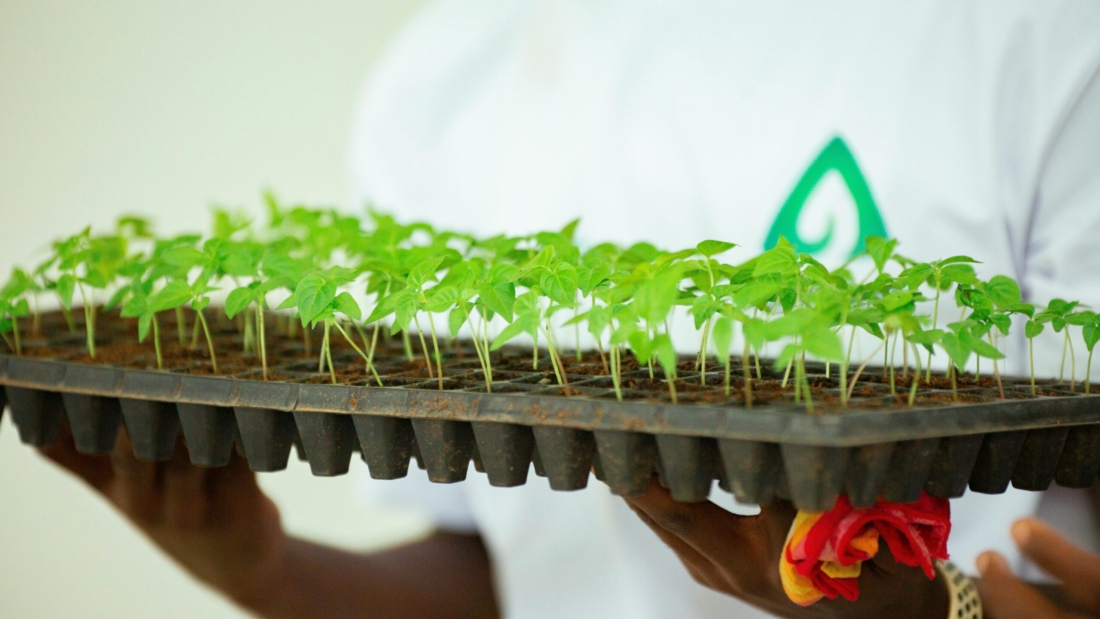
pexels-deray-35642595

Greening Ethiopia partners explore sustainability practices and certification during workshop

On 12 October 2026, partners of the Greening Ethiopia project participated in an online workshop on sustainability certification and sustainable practices in agri-food supply chains. The workshop was organised by Università Cattolica del Sacro Cuore (UCSC) as part of work package 2 (WP2) and brought together 31 participants, including speakers and organisers.

The workshop provided an opportunity to exchange knowledge on sustainability certification protocols, indicators and practical approaches to improving sustainability within universities and agricultural systems.

Exploring sustainability certification in agri-food supply chains

Professor Ettore Capri introduced approaches to measuring and certifying sustainability in agri-food supply chains. His presentation addressed the importance of reliable indicators, transparent assessment methods and independent certification in demonstrating sustainability performance.

Drawing on examples from the wine and olive oil sectors, he explained how sustainability certification can help organisations evaluate environmental, social and economic impacts and communicate their performance.

The discussions also addressed challenges related to applying certification systems in different contexts, including the need to consider local conditions and available resources.

Learning from sustainability initiatives at UCSC

The workshop also offered insights into sustainability initiatives implemented at UCSC.

Professor Marco Trevisan presented examples from the university’s Piacenza campus, including measures to reduce plastic consumption, improve sustainable mobility, promote energy efficiency and involve students in environmental initiatives.

Professor Francesco Timpano discussed the importance of integrating sustainability into university governance, education, research and institutional strategies. The presentations highlighted how universities can contribute to sustainability not only through teaching and research, but also through their daily operations and engagement with surrounding communities.

Agrivoltaics as an example of sustainable land use

Another topic was agrivoltaics, an approach that combines agricultural production with solar energy generation on the same land.

Greta Capoani introduced UCSC’s agrivoltaic park, where researchers investigate how solar panels and different crops can coexist. The presentation covered the design of the installation, ongoing crop trials and practical challenges relating to water use, shade and agricultural productivity.

The discussion explored the potential relevance of such approaches for Ethiopia, particularly in relation to land availability, agricultural production and renewable energy opportunities.

Exchanging experiences and identifying next steps

Throughout the workshop, Ethiopian university representatives from Assosa University, Bahir Dar University, Haramaya University and Mekelle University actively contributed questions and reflections on the applicability of the approaches presented. Discussions covered certification requirements, implementation costs, student engagement, institutional commitment and the feasibility of different sustainability solutions in Ethiopia.

The exchange highlighted the importance of adapting sustainability practices and certification approaches to the specific circumstances of institutions and agricultural systems.

As a follow-up, the partners continue their discussions on certification protocols, indicators and practical applications during a workshop in Addis Ababa in December 2026.

The workshop contributed to knowledge exchange between UCSC and the Ethiopian partner universities, providing examples and considerations that can inform their future approaches to sustainability certification and institutional practices.

matthias-heyde-aBGYL-ue5xo-unsplash

Greening Ethiopia partners strengthen their capacity to assess carbon emissions

As part of the Greening Ethiopia project, representatives from the four Ethiopian partner universities participated in an online workshop on calculating carbon emissions on 15 September 2026. The session was delivered by Fabian Groven from Maastricht University’s Sustainability Office, with support from Jeroen Warnier, Director Maastricht Sustainability Office.

The workshop was organised under work package 2 (WP2), which focuses on assessing the sustainability performance of the participating universities. It aimed to provide practical guidance on greenhouse gas accounting and support the university teams in calculating their carbon emissions as part of their ongoing institutional sustainability assessments.

Understanding and measuring university emissions

During the session, participants were introduced to the three main categories of greenhouse gas emissions, commonly referred to as scope 1, 2 and 3. These cover direct emissions from university operations, indirect emissions from purchased energy, and emissions associated with activities such as purchasing, waste management, business travel and commuting.

Using Maastricht University’s own carbon footprint assessment as a practical example, Fabian demonstrated how universities can identify emission sources, collect relevant data and apply emission factors to calculate their environmental footprint.

Particular attention was given to the different calculation methods and the importance of using reliable data. Participants also explored how relatively simple tools, such as Excel-based data collection sheets, can provide a starting point for measuring emissions without requiring specialised software.

Taking a practical approach to sustainability assessments

An important part of the discussion focused on the challenges of collecting reliable data, particularly where detailed information about energy consumption, purchased goods or travel is not readily available.

The Maastricht University experts emphasised that carbon emissions assessments do not need to be perfect from the outset. Instead, universities were encouraged to start with the best available data, clearly document any assumptions or limitations, and gradually improve their calculations as more information becomes available.

This practical approach will help the Ethiopian partner universities establish an initial understanding of their carbon emissions and identify areas where improvements can be made.

By strengthening their capacity to measure and monitor greenhouse gas emissions, the participating universities are taking another step towards more sustainable campus operations. The knowledge gained during the workshop will contribute to their ongoing sustainability assessments and provide a foundation for developing future emission reduction strategies.

The workshop reflects the Greening Ethiopia project’s commitment to building institutional capacity and supporting Ethiopian universities in integrating sustainability into their operations, education, research and community engagement.

Greening Ethiopia workshop at Assosa University

Greening Ethiopia workshop at Assosa University

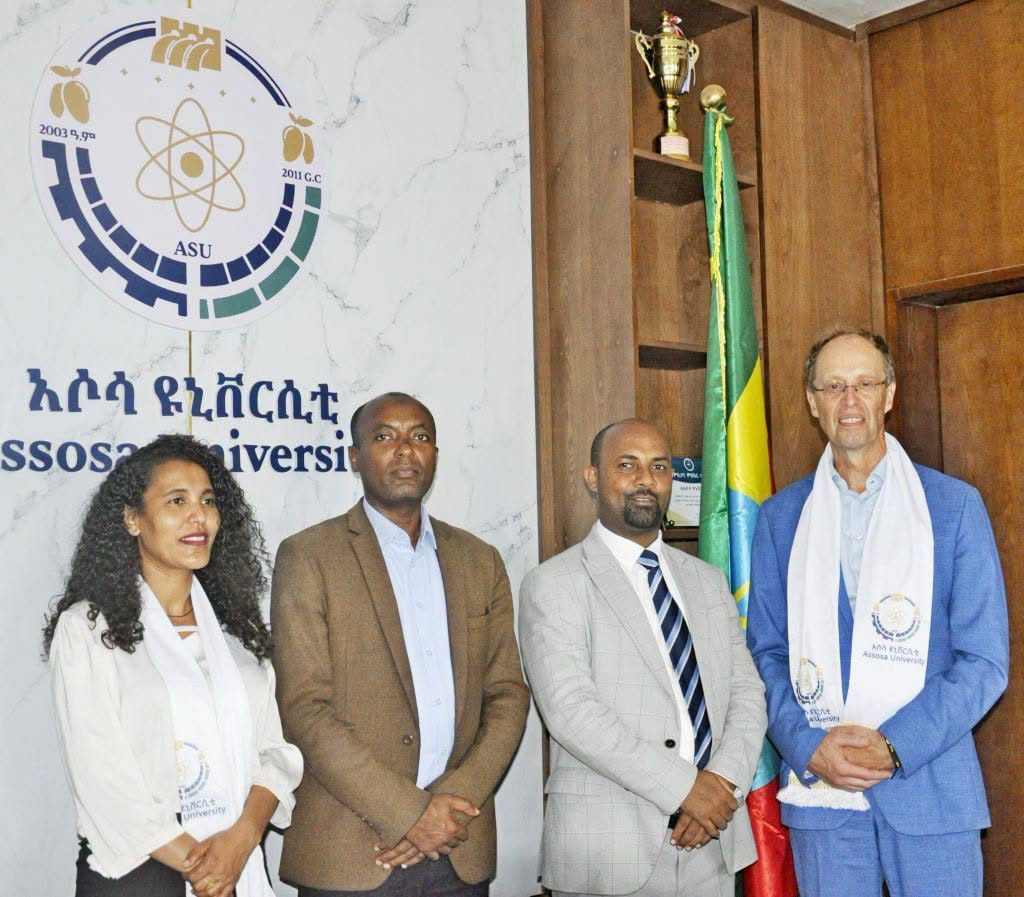
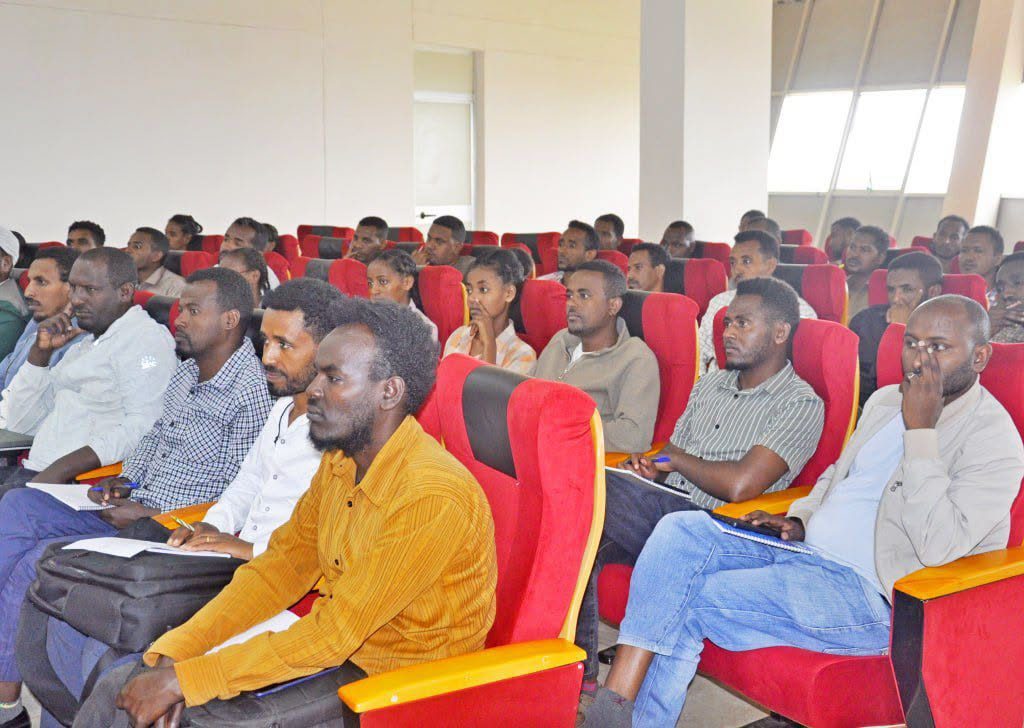
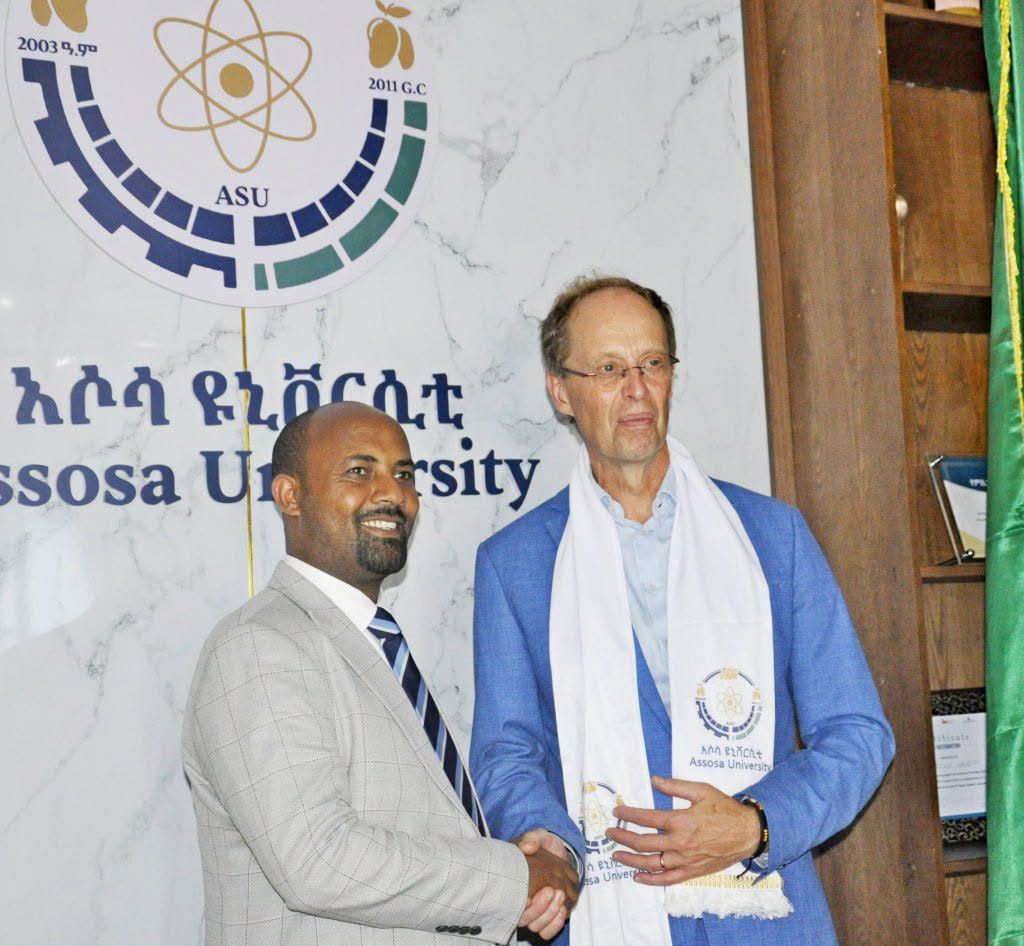
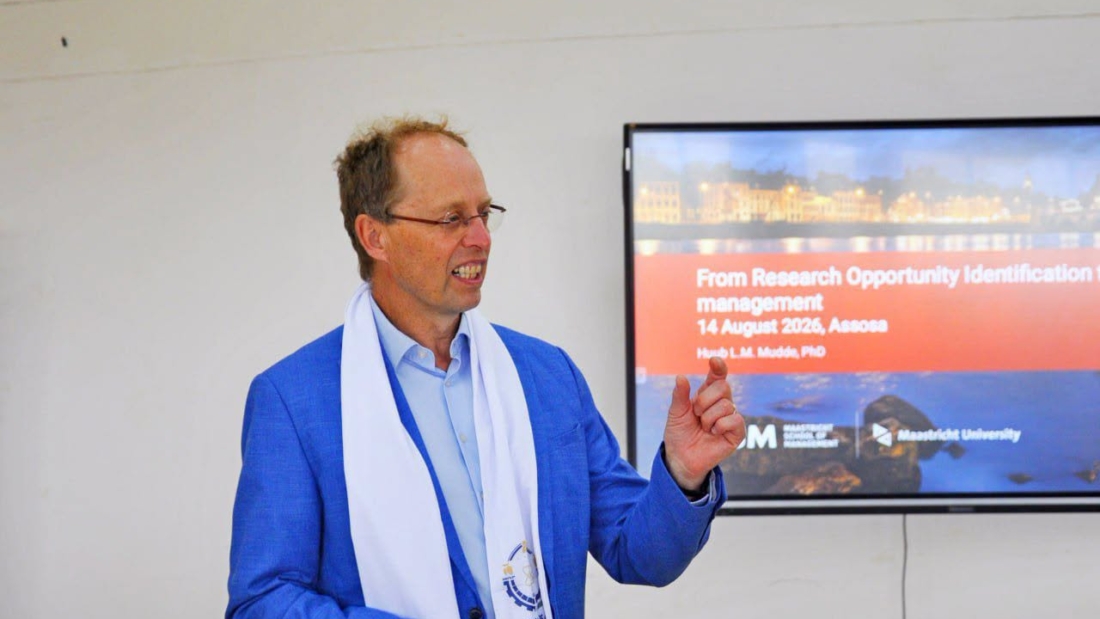
On Friday August 14, Huub Mudde, PhD, visited Assosa University, one of the partners in the Erasmus+ Greening Ethiopia project, in his role as project director. The University President Dr Yared, welcomed Dr Mudde, thanking for the pertinent international cooperation. At a Research Capacity Building Training Workshop in which about 100 faculty members participated, Mudde shared his experience on research grant opportunity identification. The workshop was organized by Dr Oumer Sheriff, Vice President for Research. Mudde shared examples on what a winning proposal should entail, stressing among others the full alignment of an idea with the priorities of the funder. Furthermore, he focused on the organizational implications. That is considered crucial, because identifying and grasping funding opportunities is team work and requires supportive internal procedures.

greening ethiopia sustainability assessment (23)

Ethiopian universities prepare for sustainability assessments through co-creation training in Addis Ababa

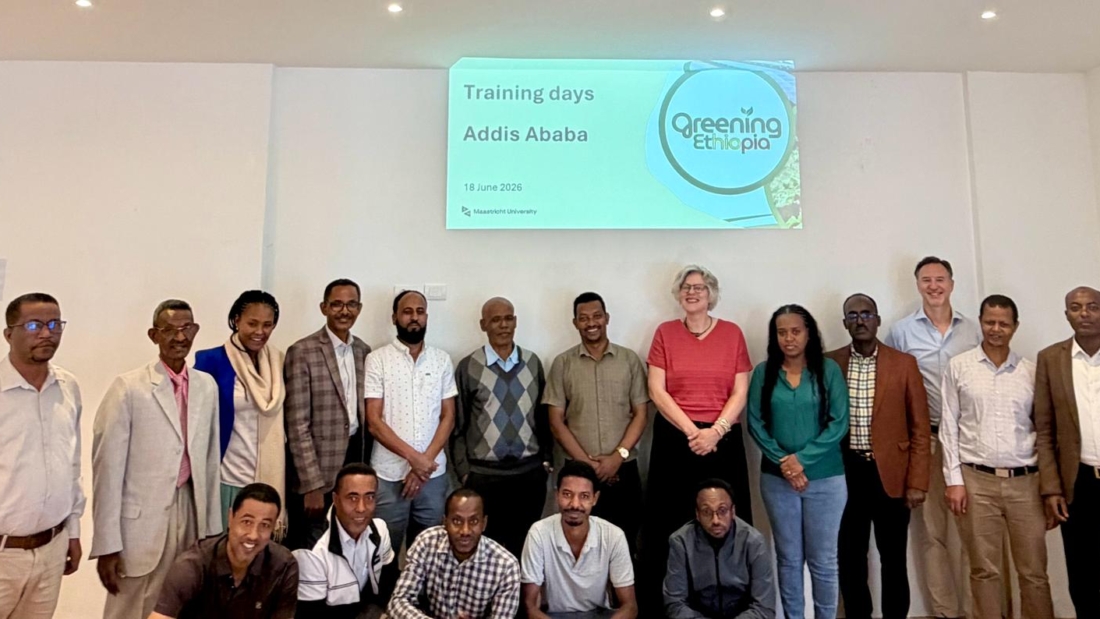
From 16 to 18 June 2026, representatives from four Ethiopian universities and Ethiopia’s Ministry of Education gathered in Addis Ababa for a three-day Sustainability Assessment Training under the Erasmus+ Capacity Building in Higher Education project Greening Ethiopia – Towards a more climate responsive higher Education system in support of sustainable agriculture and energy in Ethiopia.

The training marked an important milestone in the project’s efforts to strengthen the role of higher education institutions in supporting sustainable development and climate resilience in Ethiopia. Led by the Maastricht Sustainability Institute (MSI) and the Maastricht University Sustainability Office, the workshop focused on finalising a sustainability assessment framework that will be used by participating universities to evaluate and improve their sustainability performance.

Building a framework for sustainable transformation
The Greening Ethiopia project aims to strengthen the capacity of Ethiopian universities to contribute to sustainable agriculture, renewable energy, and climate-responsive development. As part of this effort, a sustainability assessment framework is being developed to help universities assess their current practices and identify opportunities for improvement. The assessment results will inform policy development, research activities, curriculum modernisation, and public-private partnership initiatives within the project.

The framework was developed by sustainability experts Dr. Annemarie van Zeijl-Rozema, Director of MSI and Jeroen Warnier, Director of the Maastricht University Sustainability Office. The framework was subsequently refined through a series of online consultations and co-creation sessions with Assosa University, Bahir Dar University, Haramaya University, Mekelle University, and the Ministry of Education. This process ensured that the framework reflects both international good practices and the institutional realities of Ethiopian higher education.

Building on this collaborative process,  representatives of the all partners involved came together in Addis Ababa for a face-to-face training. The workshop focused on validating the framework, refining assessment rubrics and indicators, identifying data requirements and sources, and discussing practical approaches for data collection and analysis. Through a combination of group discussions, peer learning, and hands-on exercises, participants gained experience in applying the framework and developed institution-specific plans for conducting their first sustainability assessment.

A key outcome of the workshop was the joint validation of the framework’s rubrics and units of measurement, as well as the co-creation of a user guide to support the assessment process. Participants also assessed governance, leadership, and management practices within their own institutions, allowing them to test the framework in practice and exchange experiences with peers from other universities.

The coming months will focus on implementing the sustainability assessments across the participating universities. With continued support from Maastricht University, the partner institutions will collect and analyse sustainability data and prepare university-specific assessment reports. The findings will provide a valuable evidence base for the next phase of the Greening Ethiopia project, informing activities related to policy development, curriculum modernisation, research, and innovation aimed at strengthening climate-responsive higher education in Ethiopia.

This publication was produced with the financial support of the European Union. Views and opinions expressed are however those of the author(s) only and do not necessarily reflect those of the European Union or the European Education and Culture Executive Agency (EACEA). Neither the European Union nor EACEA can be held responsible for them.